

[2022] 301a.pdf - Questions Answers PDF Sample Questions Reliable
F5 301a Dumps PDF Are going to be The Best Score
Exam Topics of F5 301a: BIG-IP LTM Specialist: Architect Set-Up & Deploy Exam
The following will be discussed in this section:
Establish the frequency of a given issue (random, continuous, isolated, intermittent, repetitive intervals)
Create and restore a UCS archive under the appropriate circumstances
Identify which high-level tasks can be automated using BIG-IQ
Given a scenario, discuss when it is appropriate to create a UCS archive
Determine use cases for disabling a member
Determine use cases for forcing down a member
Given an HA pair, describe the appropriate strategy for deploying a new software image
Given a situation where a pool member has been disabled but still appears to be receiving traffic, determine the cause
Given a description of an application, identify the correct virtual server configured for it (HTTP/HTTPS, TCP/UDP, VLANsenabled, route-domain)
Manage software images
Given a situation where a virtual server configuration change did not appear to immediately take effect, determine why
Distinguish between disabling a member and forcing it down
Understand the processes of licensing, license reactivation, and license modification (add-ons)
Discuss the tasks involved in successfully restoring a UCS archive
Explain how to modify user properties
Discuss scenarios in which restoring a UCS archive is appropriate
Use BIG-IP tools in order to identify potential performance issues
Understand how to get performance statistics in addition to the those shown in the dashboard (Overview - Performance)
Explain how to create a user U/A
Given a proposed virtual server configuration change, outline the scope of the change and for which connections those changes will affect (active connections, new connections, persisted sessions)
Differentiate between performance issue types (i.e. Latency, Congestion, broken content)
Articulate the characteristics of a pool member that has been disabled or forced offline (Such as for new connections, persisted connections, etc.)
Identify which modules are licensed and/or provisioned U/A
Recognize when a packet capture is needed within the context of a performance issue
NEW QUESTION 23
An LTM device needs an additional traffic group.
Which configuration item is required?
- A. Default device
- B. Group name
- C. MAC Masquerade Address
- D. Auto Fallback Timeout
Answer: B
NEW QUESTION 24
A company plans to launch a huge marketing campaign and expects increase demand of their secure website. With the current virtual server setup, the LTM Specialist expects that the LTM device will reach its capacity limits. For the wen application to function properly. Cookies persistence is required. The LTM Specialist needs to reduce LTM device load without breaking the application.
Which two settings should the LTM Specialist modify to meet the requirement? (Choose two.)
- A. Modify virtual Server type to performance (Layer 4)
- B. Remove web acceleration profile.
- C. Remove HTTP profile
- D. Remove ClientSSL profile
- E. Remove HTTP compression profile
Answer: B,E
Explanation:
It is required that cookie persist must be used and http profile must be used, and SSL offloading must also be required. It must be in standard mode, excluding BD E.
NEW QUESTION 25
An LTM Specialist needs to terminate client SSL traffic and based on the cookie presented by client.
Which set of profiles should the LTM Specialist use?
- A. HTTP, Client SSL, Cookie Persistence Profile,
- B. HTTPS, Client SSL, Cookie Persistence Profile
- C. HTTPS, Server SSL, SSL Cookie Profile
- D. HTTP, Server SSL, SSL Cookie Profile
Answer: A
NEW QUESTION 26
An LTM specialist needs to upgrade a VCMP quest in an HA Setup with minimum interruption for all VCMP guest instances.
In which should the LTM Specialist perform this upgrade?
- A. Failover this specific guest's active traffic-group to the other Host, Relicense the guest, copy image to guest , create guest UCS, install and set boot location to new volume, reboot
- B. Failover all guests' active traffic-group to the other host, copy image to guest, create guest UCS install and set boot location to new volume, reboot, Relicense the host
- C. Relicense the host. Failover all guest's active traffic-groups to the other host, copy image to gest, create guest UCS install and set boot location to new volume, reboot
- D. Failover all guests' active traffic-group to the other Host, Relicense the host, copy image to guest, create guest UCS, install and set boot location to new volume , reboot
Answer: D
Explanation:
Switch guest, reactive, license first and then upgrade.
NEW QUESTION 27
What should the LT'M Specialist add to the virtual server?
- A. two Stream profiles and an iRule with the command of STREAM expression (@http:// @https:// @@internalapp@publicapp@)
- B. one Stream profile and an iRule with the command of STREAM expression (@http:// @https:// @@internalapp@publicapp@)
- C. one Stream profile with the expression of @http:// @https:// @
- D. Two Stream profiles, one profile for each rewrite requirement
Answer: B
NEW QUESTION 28
An LTM Specialist regularly provides analytics reports that show that traffic generated by different subnets within the organization. The LTM Specialist needs show the associate department names next the IP addresses in the reports.
Which step should the LTM Specialist take to meet this requirement?
- A. create VLANs for each subnet and set the name accordingly
- B. define active subnets and assign a name to certain subnets
- C. use an iRule to change the output of the report
- D. export the report and add the department names manually
Answer: A
NEW QUESTION 29
A new HITP server has been deployed on an LTM device. The application running on the server must be monitored by the LIM device. The following is required:
A new HITP server has been deployed on an LTM device. The application running on the server must be monitored by the LIM device. The following is required:
When the server is unavailable, it will send an HTTP status code of 200 in response to a request for the status html page.
When the server is available. I will send and HTTP status code of 201 in response to a request for the status html page.
When the 200 status code is received, the pool member should receive No new connections.
Which configuration change should be made to meet these requirements?
- A. set the Send String to GET/ status html and the Receive String to 200 and Receive Disable String to 201.
- B. set the Send String to GET Arian and the Receive String to 200 and Receive Disable String to 201.
- C. set the Send String to GET Arian and the Receive Disable String to 200 and Receive String to 201.
- D. set the Send String to Get /status html and the Receive Disable String to 200 and Receive String to 201.
Answer: D
NEW QUESTION 30
Refer to the following iRule: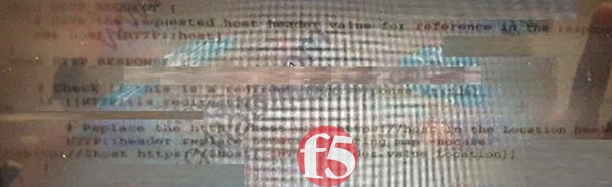
What is a complete list of profiles that must be applied to the virtual server for this iRule?
- A. Fast L4 , HTTP, Stream
- B. TCP, HTTP
- C. TCP, HTTP, Client SSL
- D. Fast L4, HTTP
Answer: B
NEW QUESTION 31
An LTM Specialist needs to deploy a virtual server that will load balance traffic targeting https://register.example.com to a set of three web servers. Persistence needs to be ensured. No persistence mirroring is allowed SSL offloading is required.
A fourth web server with fewer resources will be used to handle requests from engine bots to https://register.example.comvrobots.txt by an iRule. The (Rule will use the HTTP_REQUEST event. .
What are the required profile and persistence settings to implement this
- A. tcp, clientssl, http. cookie persistence
- B. tcp, clientssl, serverssl, ssl persistence
- C. tcp, clientssl, http, serverssl cookie persistence
- D. tcp. dientssl, hup, source address persistence
Answer: A
Explanation:
The option is wrong, it should be clientssl and serverssl. If the title requires ssl offload instead of encryption, you need clientssl instead of serverssl. irule needs HTTP profile to enable HTTP_REQUEST. If the session cannot be mirrored, the cookie session remains to meet the demand.
NEW QUESTION 32
An LI M device is experiencing a high volume of traffic. The virtual server is struggling under the load. The problem appears to be on the server side connections. The virtual server is accepting connections . The virtual server is accepting connections on https and is configured with an SSL profile and http pool.
What should be added to increase the performance of the device?
- A. smaller key to the SSL profile
- B. a One Connect profile
- C. an HTTP Compression profile
- D. a SPDY profile
Answer: B
NEW QUESTION 33
A virtual server is using a TCP profile based on the top-wan-optimized profile for a streaming application Users report videos are loading slowly.
Which setting should be modified in the TCP profile to optimize the application?
- A. Disable Reset on Timeout
- B. Disable Selective ACKs
- C. Disable Nagle's Algorithm
- D. Disable Slow Start
Answer: D
NEW QUESTION 34
An LTM Specialist needs to configure a virtual server with the requirements displayed below.
Application is currently an internal HTTP application
Encrypted external user access
Links are hard for siteA example.com and need to rewritten to siteB.Example.com Which profiles must the LTM Specialist use to provide the proper functionality?
- A. Clientssl, fastL4, Stream
- B. Serverless, fastL4, Stream
- C. Clientssll, Stream
- D. Serverless, Stream
Answer: C
Explanation:
For http application and external encryption, clientssl is required, and if the message content needs to be modified, the steam profile is required. FastL4 profile cannot coexist with clientssl and stream.
NEW QUESTION 35
The picture belongs to static content, you can configure static content cache in FS to meet this demand An LTM Specialist must configure session persistence for a highly available, highly utilized web-based application.
* The following requirements are provided:
* http proxy setup for security
persistence information available to the HA peer in case of failover
The LTM Specialist needs to minimize additional burden on the LTM device to the greatest extent possible.
Which persistence profile should be used?
- A. Cookie insert
- B. Destination Address Affinity
- C. Universal
- D. Source Address Affinity
Answer: A
NEW QUESTION 36
An LTM Specialist has recently taken over administration or an LTM device that has experienced resource availability issues. The LTM device will need to be solely used for load balancing and SSL offload. Previously, the LTM device was also used to provide statistical analysis of application traffic. However, that functionality has been moved to a third party solution.
Based on the output below, which configuration change should be made to ensure the LTM module receives the most amount of resources?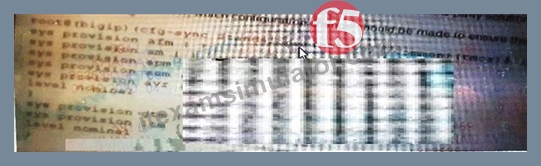
- A. Provision AVR to none. Provision LTM to Dedicated
- B. Provision AVR to Minimum. Provision LTM at Maximum
- C. Provision AVR to Minimum, Provision LTM to Dedicated
- D. Provision LTM to Dedicated, Provision AVR to Dedicated
Answer: A
NEW QUESTION 37
An LTM Specialist needs to force only FTP traffic, sourced from subnet 10.10.10.0/24 to virtual server 10.10.20.1 to the new FTP1 server. The following virtual servers are configured on the LTM device:
Traffic sourced from 10.10.10/24 must use the specific pool member for load balancing.
Which configuration change is needed to meet the requirements?
- A. Create a new virtual server for traffic sourced from 10.10.10.0/24 on port 80 that is destined to 10.10.20.1/32, and create a new pool has only the pool member FTP1 defined.
- B. Create a new virtual server for traffic sourced from 10.10.10.0/24 on traffic sourced from 10.10.10./24 on port 21 that is destined to 10.10.20.1/32, and create a new pool that has only the pool member FTP1 defined.
- C. Add FTP1 to the pool assigned to the MyVS2 virtual server, and remove all other pool member from the pool.
- D. Add FTP1 to the pool assigned to the MyVS4 virtual server, and remove all other pool members from the pool.
Answer: C
Explanation:
According to the VS matching order, first match the destination host IP, then match the destination port and finally match the source network segment. In the current network configuration, 10.10.10./24 access to 10.10.10.20.1 will hit MyVS2. If there is no error in the title, subnet 10.10.10.0 to virtual Server 10.10.20.1 to the FTP1 server,'' Is to distribute all traffic from 10.10.10.1 to FTP1, then D That's right.
NEW QUESTION 38
Which Standard Virtual Server settings should an LTM Specialist use to load balance across routed path of two different ISPs?
- A. both address and port translation enabled
- B. address translation disabled and port translation enabled
- C. both address and port translation disabled
- D. address translation enabled and port translation disabled
Answer: A
NEW QUESTION 39
A virtual server configuration for traffic destined to a server is as shown: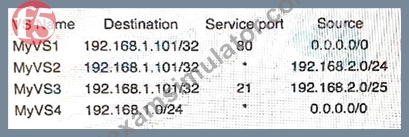
FTP traffic is destined to the 192.168.1.101 server from the source of 192.168.2.129.
Based on precedence, which virtual server accepts this traffic?
- A. MyVS1
- B. MyVS4
- C. MyV53
- D. MyVS2
Answer: D
NEW QUESTION 40
......
Who should take the F5 301a: BIG-IP LTM Specialist: Architect Set-Up & Deploy Exam
People who choose to receive an F5 Professional Certification, which certifies their abilities to manipulate the whole device stack, from standard network experience to specialized application-layer awareness, and the ability to combine the two realms. Candidates should be familiar with network fundamentals, protocols, and general traffic control principles. The student should also be familiar with the basics of F5 technologies as they pertain to network fundamentals, protocols, and traffic control. ITExamSimulator provides applicants with validated questions and correct responses that would be asked throughout their final test. As a result, candidates are more likely to achieve high scores on the final test, and one of the best things is that we even have F5 301a dumps in PDF format, which candidates can import and review offline.
The following knowledge/abilities are required of candidates:
- Describe HTTP’s legitimate uses and processes.
- Describe the Open Systems Interconnection (OSI) model’s seven layers.
- Recognize and identify the TMOS elements (F5 Traffic Management Operating System).
- Describe the benefits of using a complete device proxy.
The F5 BIG-IP Local Traffic Manager (LTM) Specialist: Maintain & Troubleshoot 301a Exam certification is a globally recognized credential that certifies individuals as F5 Certified Technology Specialists. If an applicant wishes to advance in their profession, they must develop their experience, qualifications, and abilities. This specialized expertise and ability is shown by the F5 BIG-IP Local Traffic Manager (LTM) Specialist: Maintain & Troubleshoot 301a Exam qualification. If an applicant has passed the F5 LTM Specialist: Architect, Setup, and Deploy 301a Exam and has knowledge of the related technology and skills needed to pass the F5 BIG-IP Local Traffic Manager (LTM) Specialist: Maintain & Troubleshoot 301a Exam, he can take this exam.
Introduction to F5 301a: BIG-IP LTM Specialist: Architect Set-Up & Deploy Exam
The eligible applicant is capable of using TMOS-based systems that have already been developed on a daily basis. They may also perform simple troubleshooting on a TMOS-based system in order to provide senior engineers and/or F5 Support with full, correct, and relevant details.
They are capable of completing all of the following tasks without assistance:
- Use the GUI to perform administrative tasks - Recognize the differences and relationships among virtual servers, virtual server forms, virtual addresses, pools, pool participants, nodes, profiles, iRules, and address translation (NAT/SNAT).
- Able to use different paths to connect and control the BIG-IP (management IP, Self IP)
- Open a help case and use online tools like AskF5, F5 iHealth, and DevCentral to learn about HTTP, ClientSSL, ServerSSL, TCP, UDP, and persistence profiles.
- On the platform, execute information administration tasks (for example, capable of performing upgrades and licensing).
Use 301a Exam Dumps (2022 PDF Dumps) To Have Reliable 301a Test Engine: https://www.itexamsimulator.com/301a-brain-dumps.html
LTM Specialist 301a Exam and Certification Test Engine: https://drive.google.com/open?id=1FkJnRRPxvsMCPtPNBjvIL27O5UH5gRwA
